Across both Game Production and Core Platform, I led strategic UX initiatives to reduce fragmentation, increase adoption, and create scalable foundations for complex internal systems.
Game Production
- Redesigned the Game Engine Editor update ecosystem to eliminate version mismatch, reduce update anxiety, and increase adoption from under half of users to strong majority adoption — accelerating feature rollout and improving production stability.

Core Platform
- Drove UX strategy across workspace management, game environment management workflows, and platform self-service — unifying disconnected tools into coherent, research-informed experiences.
The Strategic Challenge
Fragmentation Across Production & Platform
Both organizations faced variations of the same systemic problem:
Tool Fragmentation & Low Adoption
Disjointed systems, inconsistent workflows, and bypassed tools led to version mismatch, manual overhead, and delayed feature adoption.
Trust & Predictability Gaps
Users hesitated to update or adopt new features due to fear of disruption, unclear communication, and workflow instability.
Operational Inefficiencies
Manual coordination, Slack-based tracking, and dependency on tribal knowledge slowed delivery and increased risk.
While the surface problems differed — editor updates in Game Production, workspace and environment complexity in Core Platform — the core challenge was identical:
Create coherent, scalable ecosystems where updates and workflows are predictable, trusted, and frictionless.
1. Streamlining the Game Engine Editor Update Experience
The internal game engine ecosystem suffered from low adoption and fragmented workflows. Less than half of users were on the latest editor version, meaning critical hotfixes and new features took months to reach production teams.
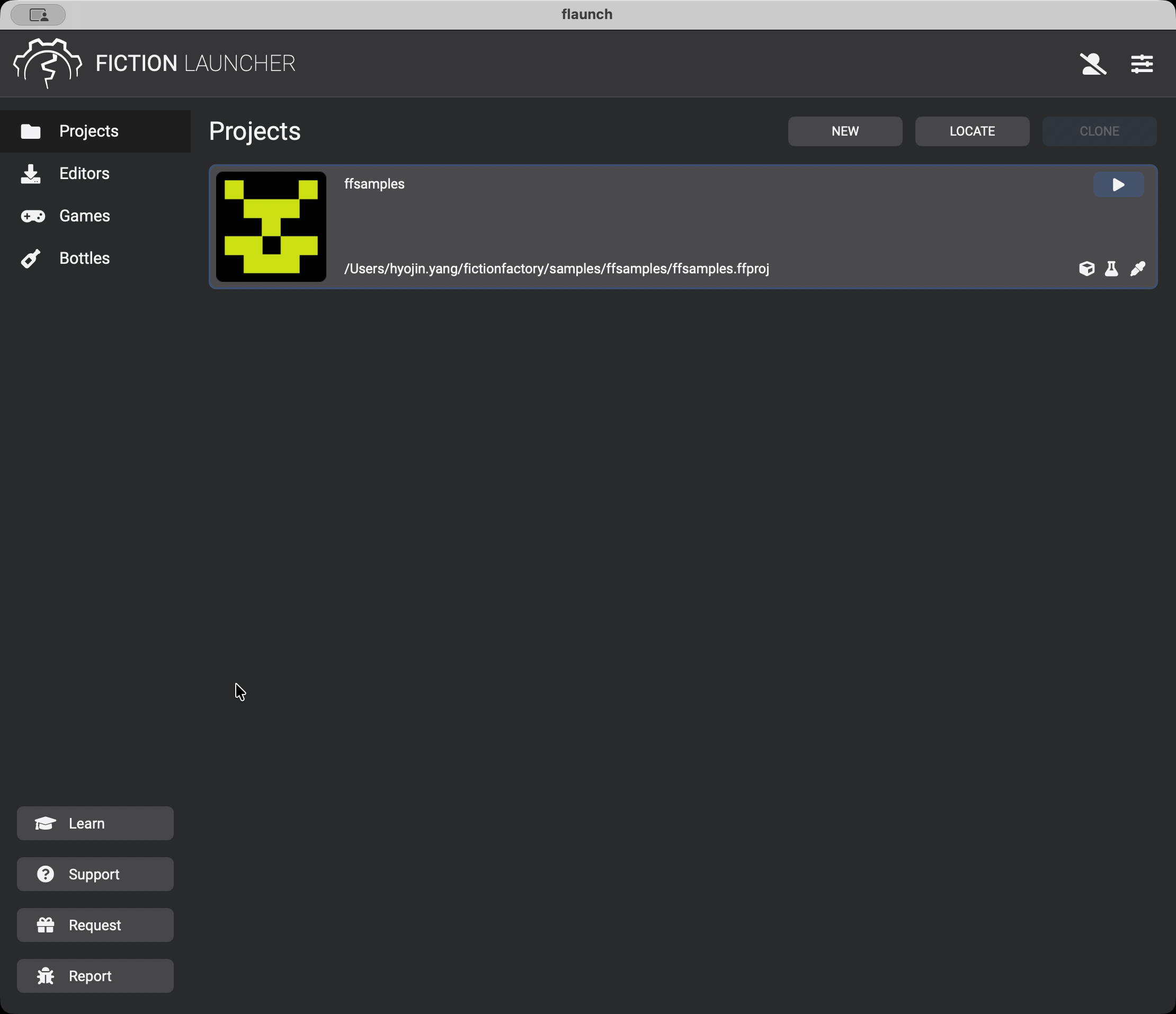
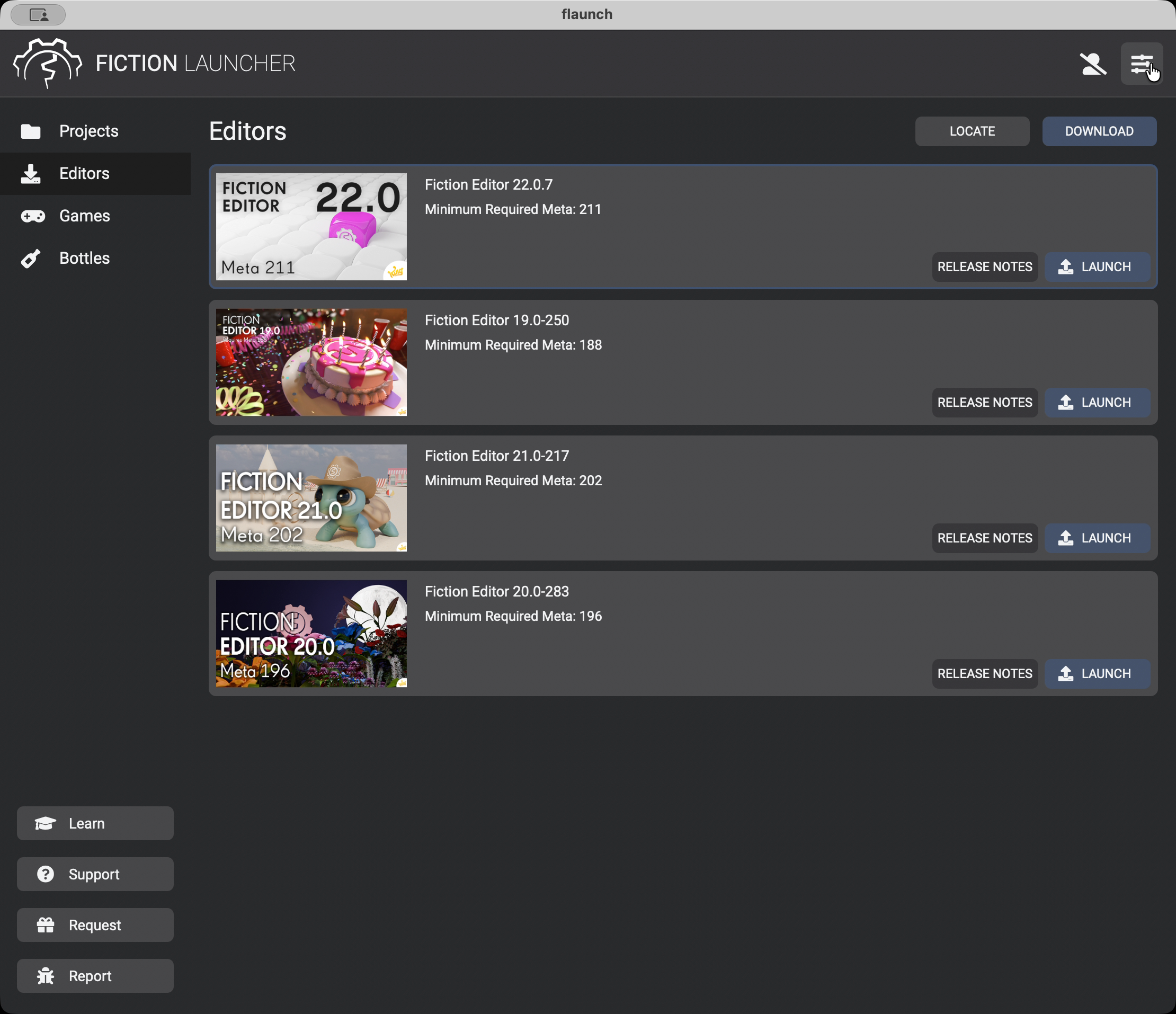
Despite having a launcher tool, the update experience was broken: users bypassed the official launcher, version mismatch errors were common, updates felt risky and disruptive, and manual version tracking via Slack and Jira was required.
The underlying issue wasn't just tooling — it was trust, predictability, and system coherence.
The mission: Create a Cohesive Content Creation Ecosystem where creators are always just "One click away from their work."
The Core Problems
Fragmentation & Low Adoption
~55% of users bypassed the launcher and downloaded builds directly. This created version fragmentation and delayed adoption of fixes.
Update Anxiety
Users feared that updating would "break the build." As a result, they hoarded old versions or delayed updates defensively.
"Updates feel risky and unclear and require manual actions." — User feedback
Manual Overhead
Version tracking relied on Slack and Jira. Incompatible launches caused project de-syncs and merge conflicts.
Strategic Alignment & Approach
As the UX lead, I initiated the discovery phase by conducting qualitative research — contextual inquiries, workflow observations, and semi-structured interviews with 12 developers, 5 artists, and 3 technical artists across multiple game teams. I synthesized 47+ interview quotes through affinity mapping, identifying 5 core themes that shaped the strategic direction. Findings were shared broadly to build a shared understanding of why this initiative mattered — not just what needed to be fixed.
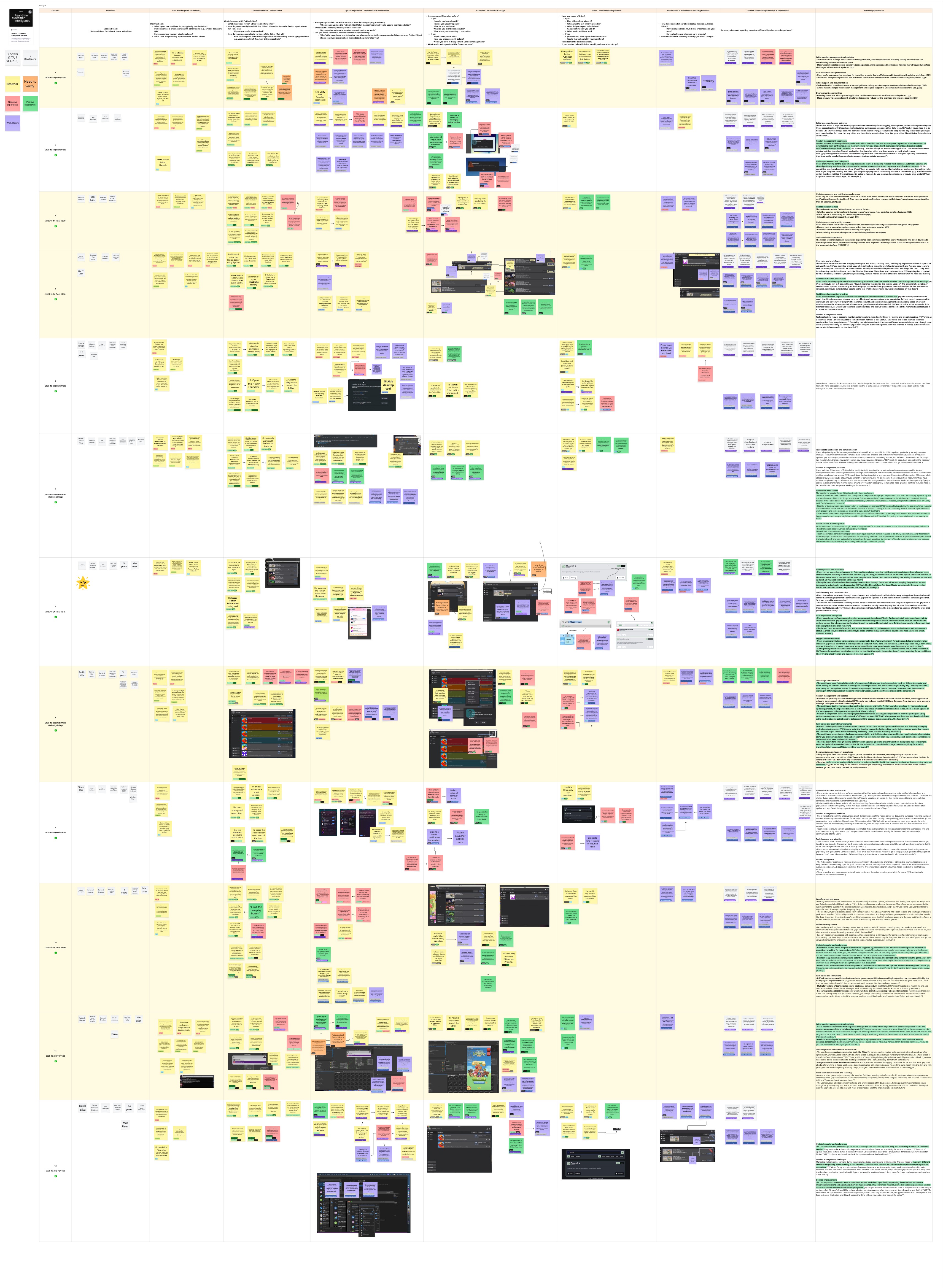
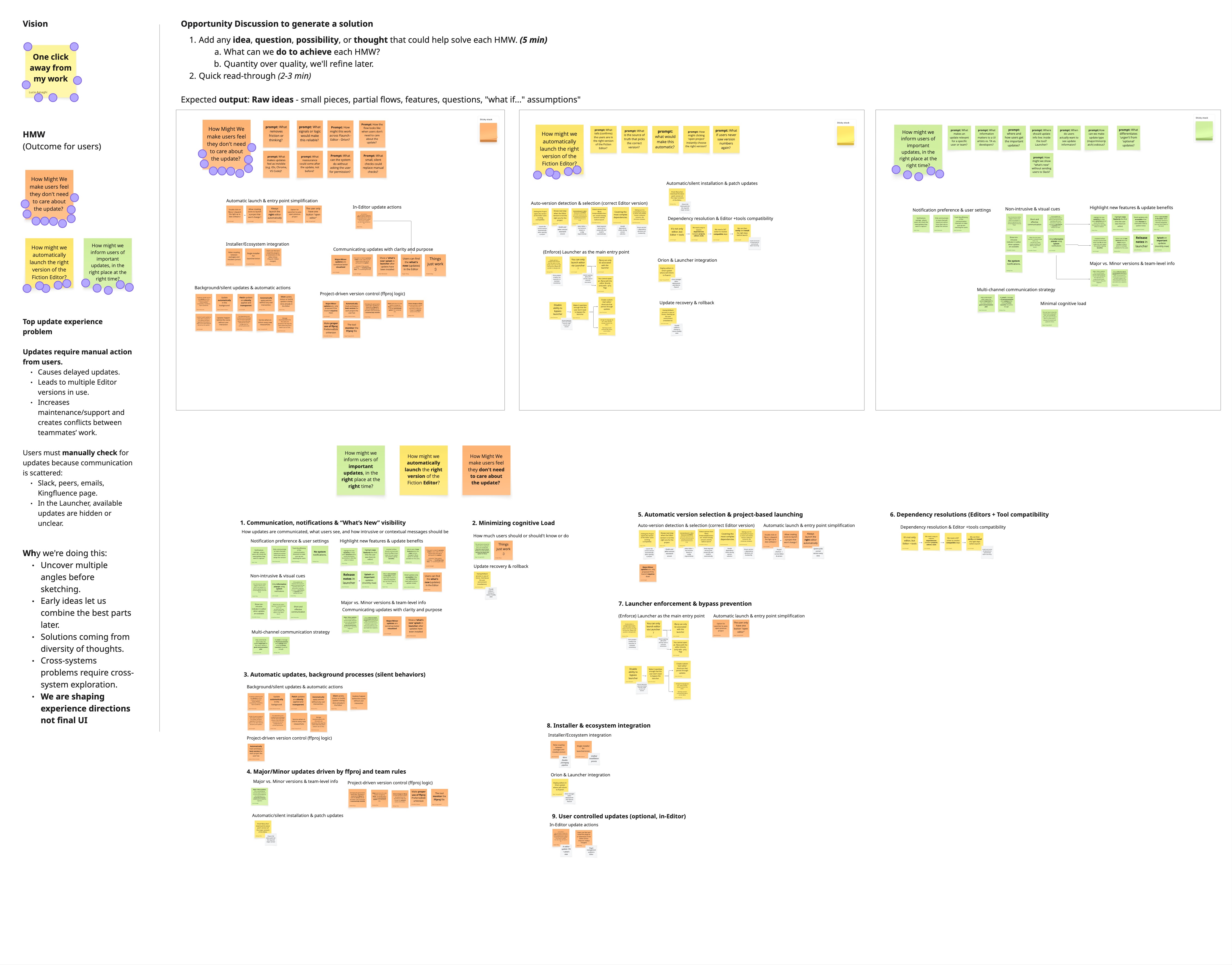
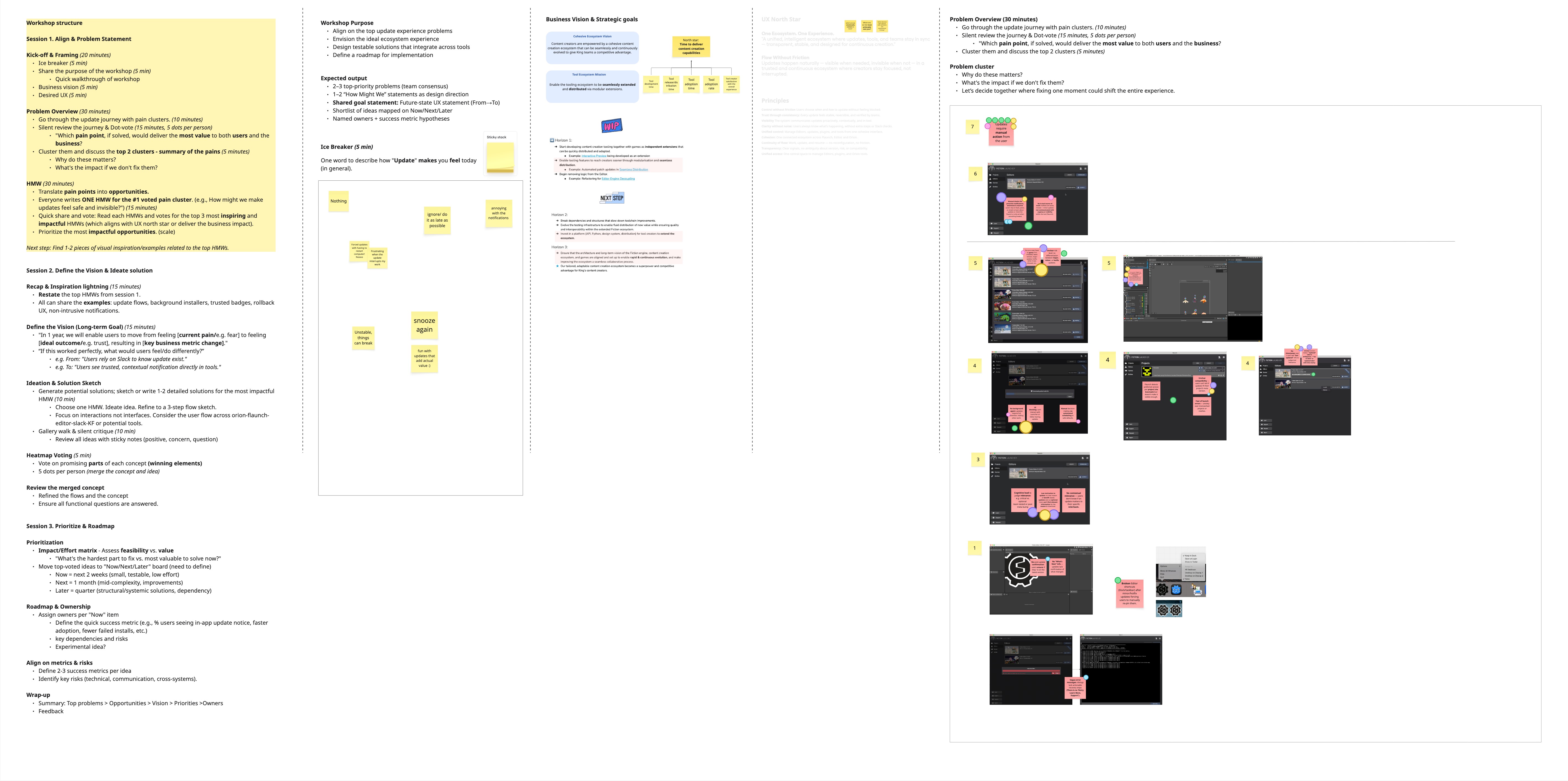
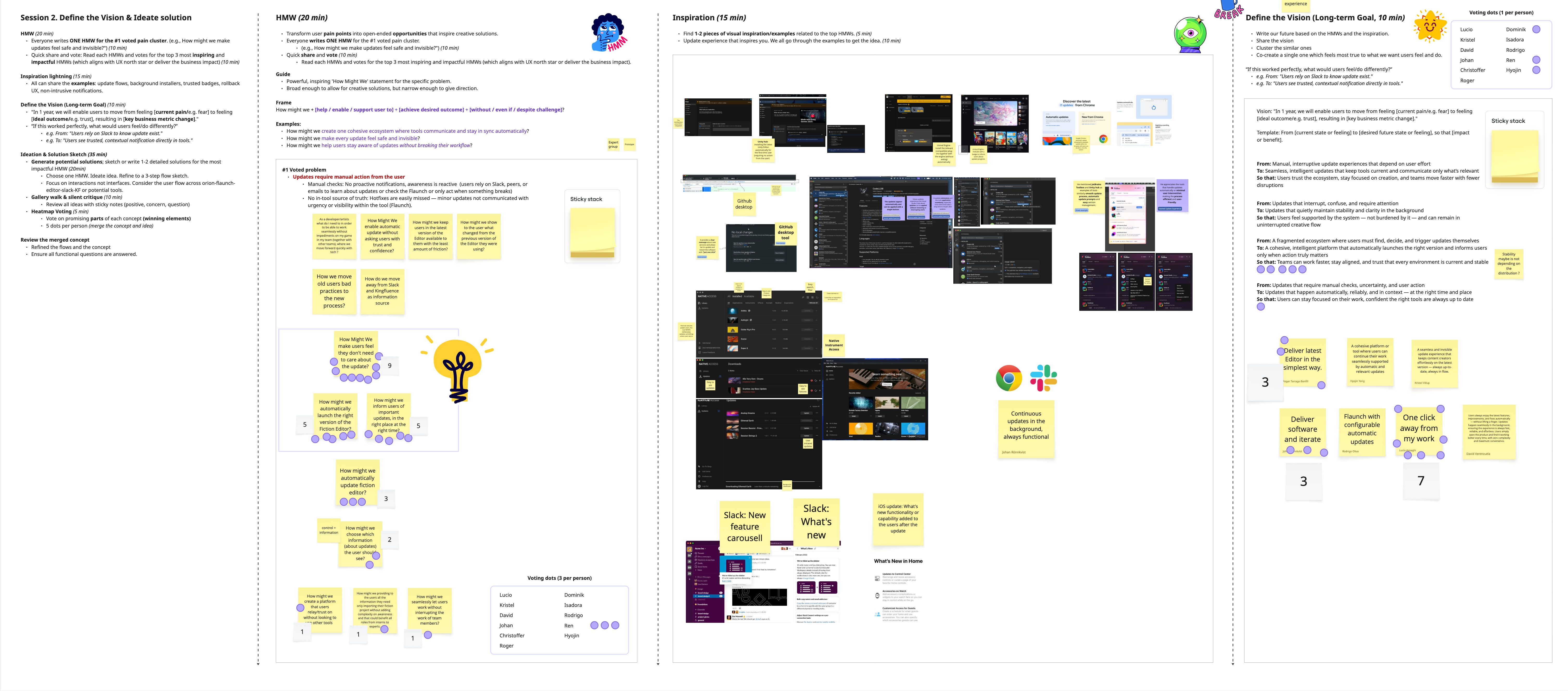
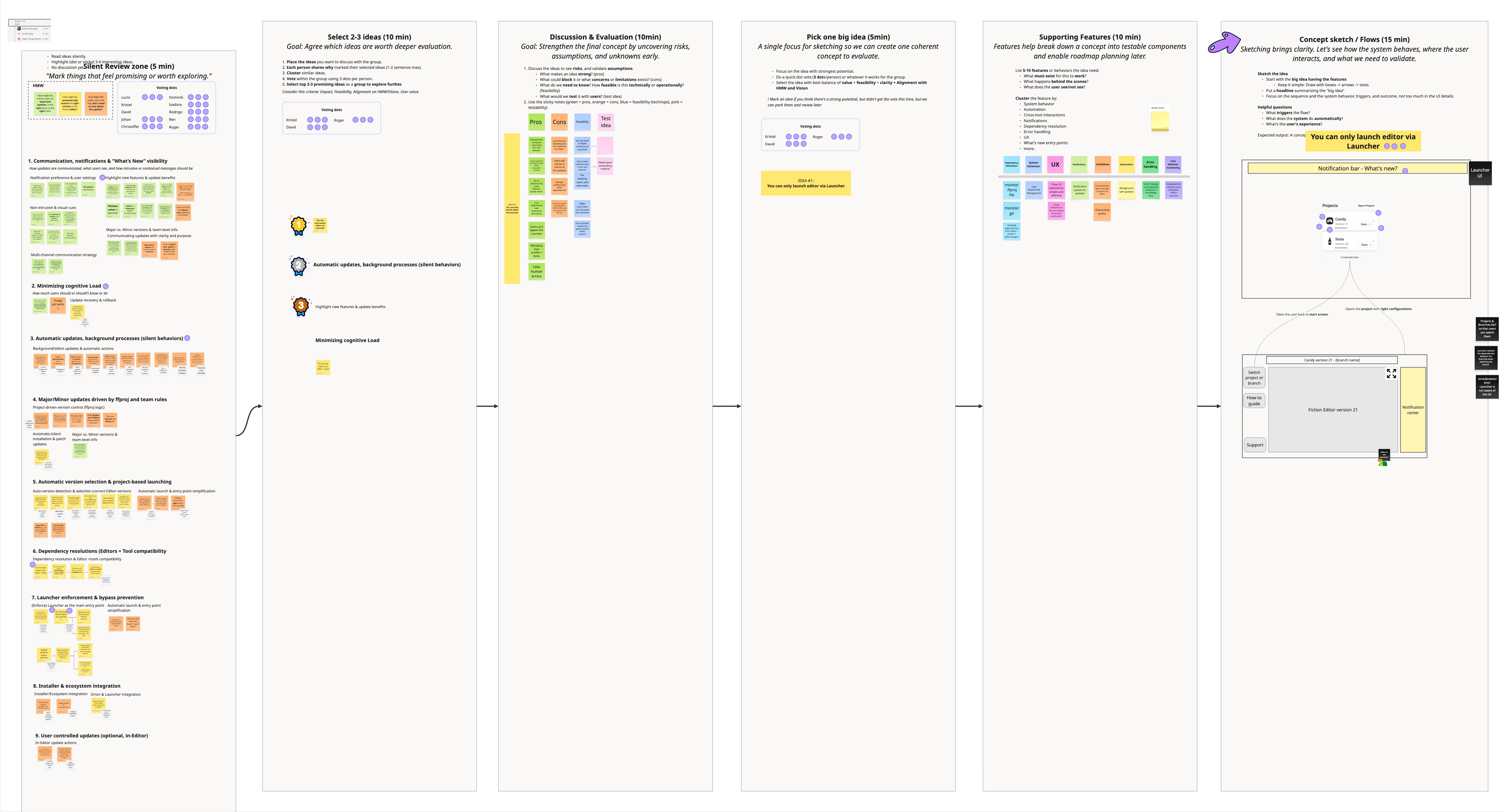
I facilitated a series of cross-functional workshops — both in-person and remote across distributed teams in multiple time zones — to prioritize the most critical problem to solve first, define clear problem statements, align UX, engineering, and product around shared objectives, and identify technical enablers required for sustainable change. For remote sessions, I used async pre-work (Miro boards for silent input) to ensure all voices were heard regardless of location, followed by synchronous synthesis sessions.
We defined a guiding vision: "One click away from my work."
Design Solution: Smart Project Launch System
After identifying the highest-impact problem, I led ideation sessions to generate solution concepts. We explored and refined ideas using AI-generated prototypes to quickly visualize flows and test assumptions, then prioritized features and defined a focused MVP.
1. Smart Project Launch
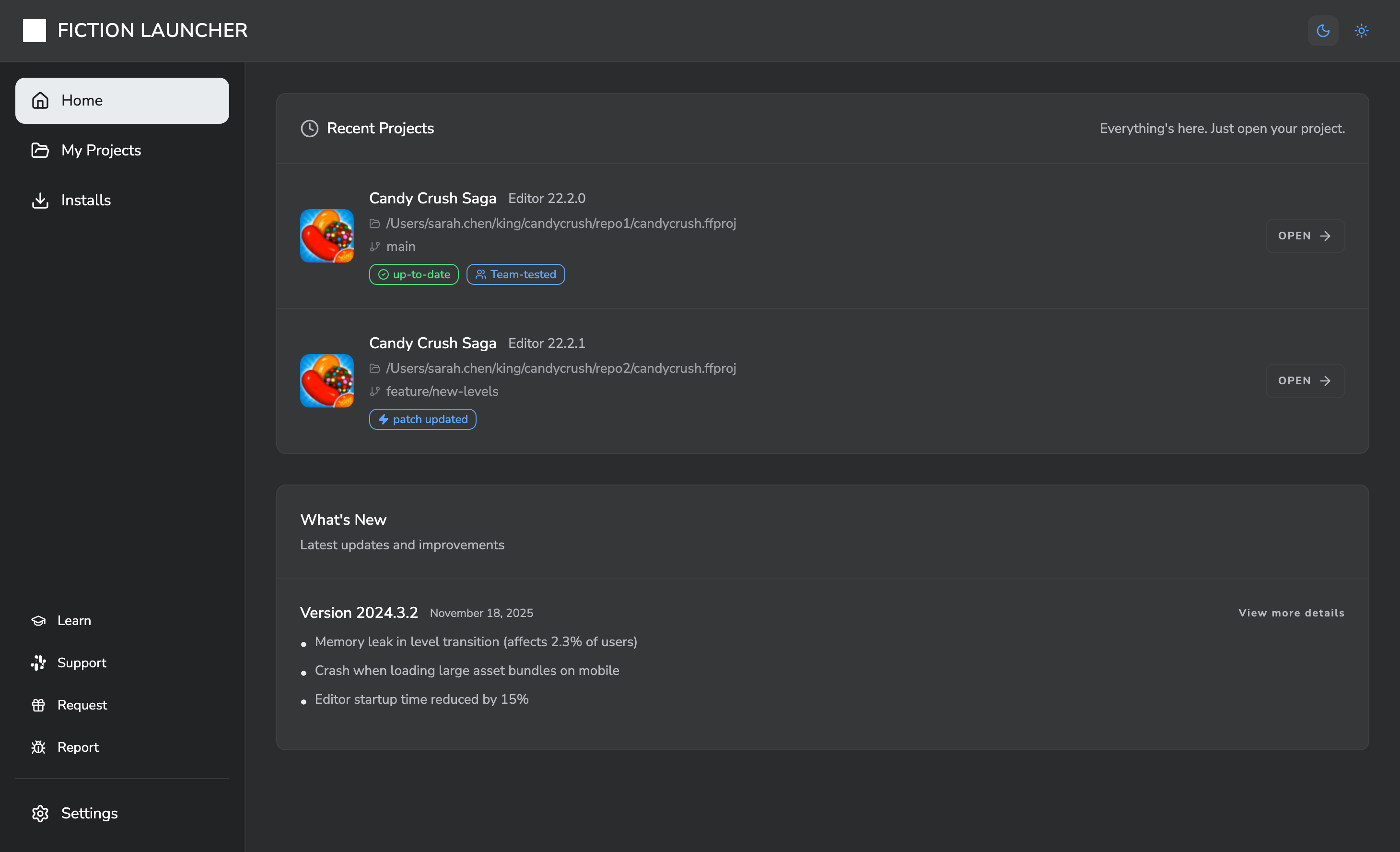
- Double-clicking a project file automatically launches the correct editor version
- Version mismatch errors are eliminated
- Manual version management is removed
2. Structured Update Journey
Mapped the update experience into: Awareness → Decision → Locate → Action → Launch
- Awareness: Clear "What's New" messaging with severity labels (Hotfix, Minor Update, Major Update)
- Decision Support: "Team-Tested" badges, risk labels, and severity indicators to reduce anxiety
3. Non-Blocking Updates
- Updates download silently in the background
- Users can continue working
- Installation no longer blocks productivity
4. Continuity & Trust
Workspace layouts, panels, and shortcuts persist across updates. Preserving context was essential to rebuilding trust in the update system.
Validation & MVP Refinement
Once the MVP direction was defined, I built an interactive prototype to get feedback from the team and users. Feedback was incorporated iteratively, refining both feature scope and messaging before implementation.
AI-Augmented Design Process
This project deeply integrated AI tools across the entire design workflow — from research synthesis to prototyping to validation.
Rapid Prototyping
Rather than spending weeks on static mockups, I used AI-assisted coding tools (Claude Code, Cursor) to generate functional interactive prototypes in hours. This changed the dynamic of stakeholder conversations:
- Teams interacted with working prototypes instead of debating wireframes
- Engineering assessed feasibility earlier because prototypes demonstrated real interaction patterns
- We iterated through 4 major prototype versions in the time it would have taken to produce 1 traditional Figma prototype
Research Analysis & Synthesis
AI compressed our research synthesis from weeks to days, letting us spend more time on interpretation and strategic decisions:
- AI-assisted transcription and quote extraction from user interviews, accelerating affinity mapping across sessions
- Thematic clustering of interview data across different user segments (developers, artists, technical artists) to surface cross-cutting patterns
- AI-drafted research summaries that I validated and refined before presenting to stakeholders, ensuring both speed and rigor
Designing Agent-First Experiences
The Smart Project Launch system itself embodies agent-first design thinking: the system automatically resolves version compatibility, downloads updates silently, and preserves workspace state — removing every manual step from the user's workflow. Rather than designing a better UI for version management, we designed the workflow away entirely. Users don't manage versions; the system manages versions for them. This is the core principle behind agent-first design: automate the task, not just the interface.
AI doesn't replace design judgment, but it compresses the time between hypothesis and validation, letting teams focus on the hard decisions about what to build and why.
Key Design Decisions & Trade-offs
We chose silent background downloads over forced mandatory updates.
Research showed that forced updates were the primary driver of launcher bypass. Users needed to feel in control, even if the update was important. The trade-off was slower adoption of critical hotfixes, which we mitigated with severity labels and "Team-Tested" badges that created social proof.
We rejected a single-version policy in favor of managed version diversity.
Engineering initially proposed forcing all users to a single version. User research revealed that game teams at different production stages had legitimate reasons for version differences. Instead, we designed "project-pinned versions" that preserved flexibility while eliminating accidental mismatch.
We prioritized workspace continuity over feature discoverability.
Users cared more about "will my setup survive the update?" than "what's new in this update?" We deprioritized a prominent "What's New" modal in favor of a subtle notification system, preserving the user's workspace state as the primary post-update experience.
Impact & Success Metrics
Key Takeaway
This initiative demonstrates how UX leadership can reframe fragmented tooling as a systemic workflow issue, align teams around a shared understanding of risk and trust, drive both architectural and experiential change, and transform manual, anxiety-driven processes into predictable, scalable systems. By grounding the work in research, aligning stakeholders early, and shaping the MVP through iterative validation, we turned version management from a source of friction into a strategic advantage.
Designing for Scale: Solve the Pattern Once, Deploy Everywhere
From the start, I designed the update experience as a reusable pattern system rather than a one-off solution. The core patterns — version pinning, trust signals (severity labels, "Team-Tested" badges), non-blocking background updates, and workspace-preservation logic — were deliberately abstracted from the specific Game Editor context.
This meant that when other internal tools faced similar adoption and trust challenges, the patterns could be applied directly without redesign:
The lesson: When you solve the right systemic problem at the pattern level, you create a design system for behavior — not just for UI components. Each new tool adoption becomes a deployment, not a redesign.
2. Driving Strategic UX Design & Maturity at King
Key Impact
- Elevated UX visibility and strategic influence in the organization
- Improved UX maturity by embedding research and process across teams
- Validated and secured buy-in for a personalized portal concept
- Created a shared language and structure for UX strategy and execution
Key Takeaways
My work represents the evolution from a fragmented, engineering-first UX approach to a scalable, strategy-driven practice rooted in user insights. I played a key role not just as a designer, but as a facilitator, educator, and advocate.
The systems and rituals we put in place continue to grow and scale UX thinking across Shared Tech at King.
Outcomes & Next Steps
What changed: platform workflows became more predictable, reducing coordination friction and improving team confidence.
What scaled: decision frameworks and collaboration rituals became reusable patterns across Shared Tech initiatives.
Next: extend the evidence-led model to more platform domains and strengthen telemetry that links UX changes to delivery outcomes.