
Led UX strategy and design teams to overhaul H&M's global membership program, directly contributing to doubling the active member base from 50 million to 100 million across 74 markets in just one year.
The Strategic Challenge
A Disconnected Experience Was Stifling Growth
H&M's existing digital experience was fragmented. The "My H&M" account and the "Club" loyalty program were treated as separate products, leading to significant customer confusion and a disconnect between the brand's digital and physical stores.
My role: Lead the 'My account & Membership program' UX team, which included two UX designers and an external agency (AKQA). I was responsible for unifying the customer experience, defining the strategic direction with stakeholders, and ensuring our design solutions delivered on key business outcomes.
The confusing sign-up process, especially in-store, was a major barrier to acquiring new members
Customers struggled to understand the benefits of membership
Without a unified view of the customer, strategic decisions were difficult
From Fragmentation to a Unified, Omni-Channel Vision
Simplifying Sign-Up
We identified the in-store sign-up as the biggest bottleneck. Through workshops with stakeholders and developers, we designed a flexible, quick sign-up form that could be adapted for market-specific needs, such as WeChat integration in China.
Solution: Simple, quick & flexible sign-up form with market-specific flexibility
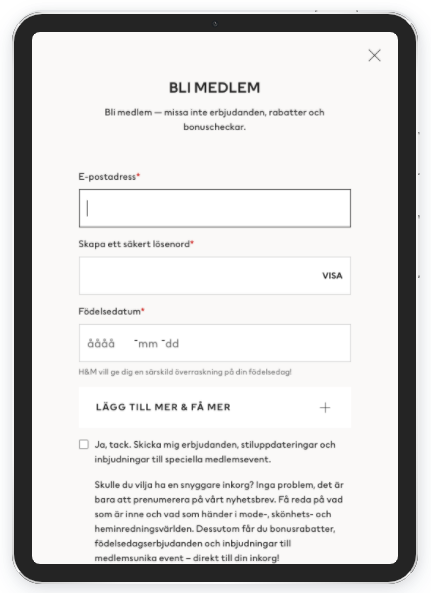
Simple, quick & flexible sign-up
My Role:
- Brought customer insights into the business to align with user needs
- Defined the core problem: Sign-up especially in physical stores is the biggest barrier
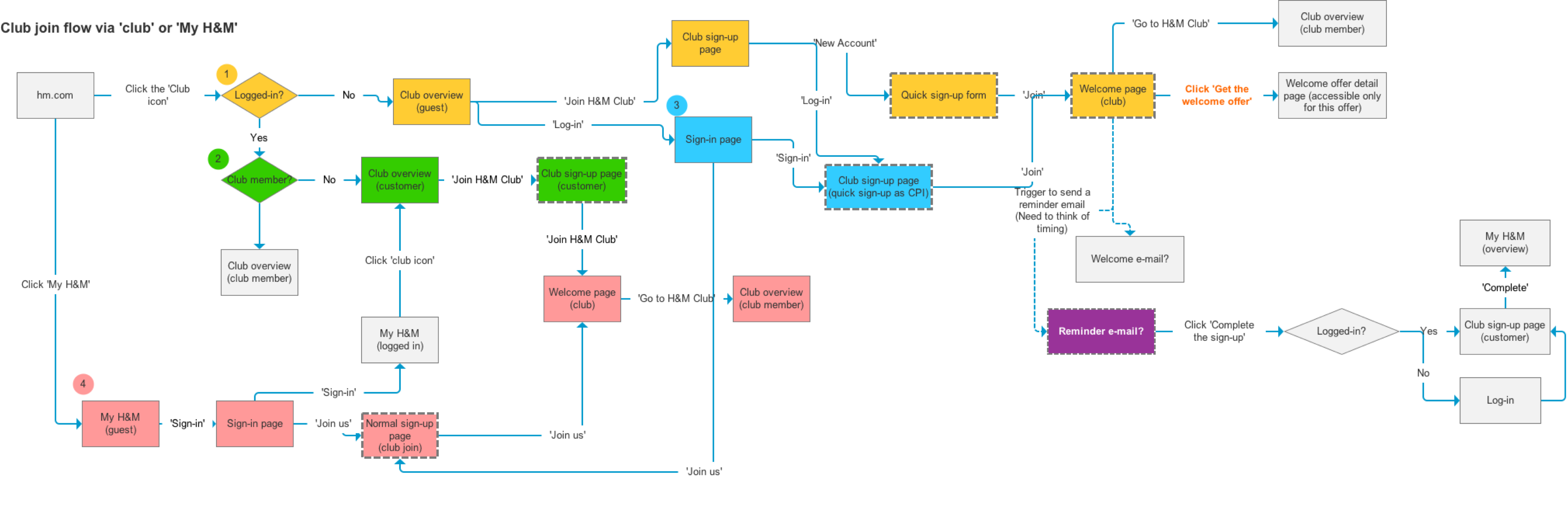
Inconsistent and complicated sign-up process per market
- Ideated solution with business stakeholders, developers, and designers
- Compiled country-specific requirements divided into essential and optional categories
Unifying the Experience
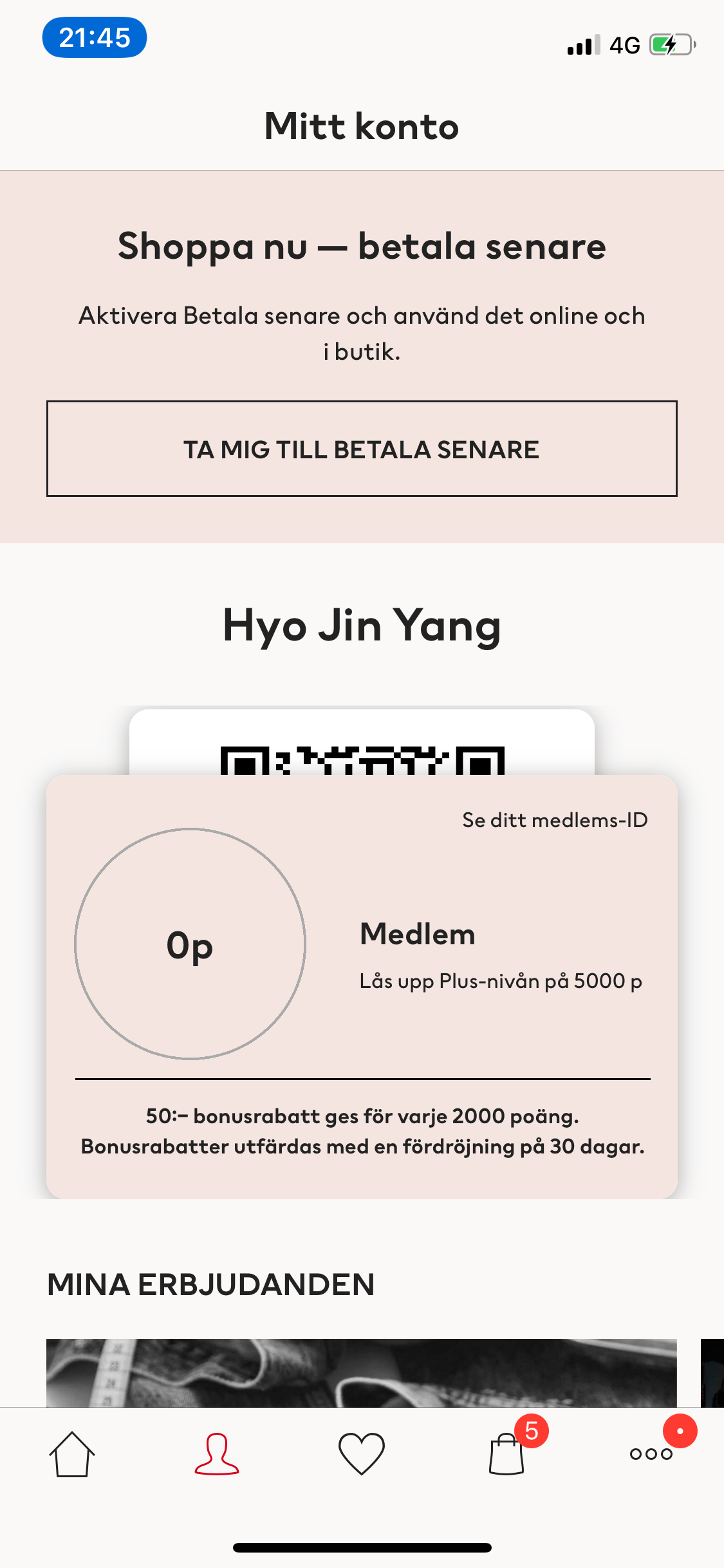
A core part of our strategy was merging the "My H&M" account with the "H&M Club" into a single, intuitive entity. This involved extensive user research and concept validation to ensure the new structure met customer expectations.
Solution: Connect My H&M and H&M Club to deliver more relevant and personal features and offers
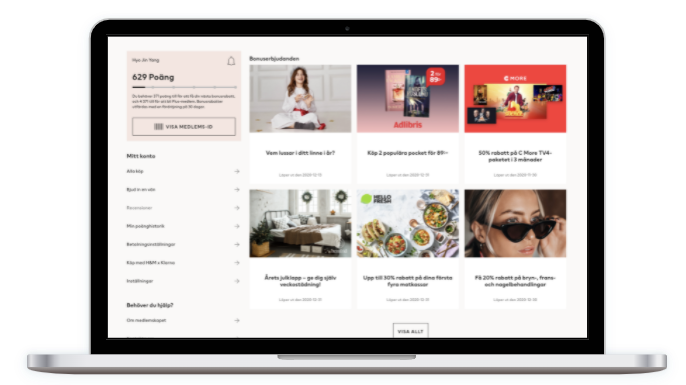
My account (H&M Member)
My Role:
- Collected customer insights via user research and shared with the team
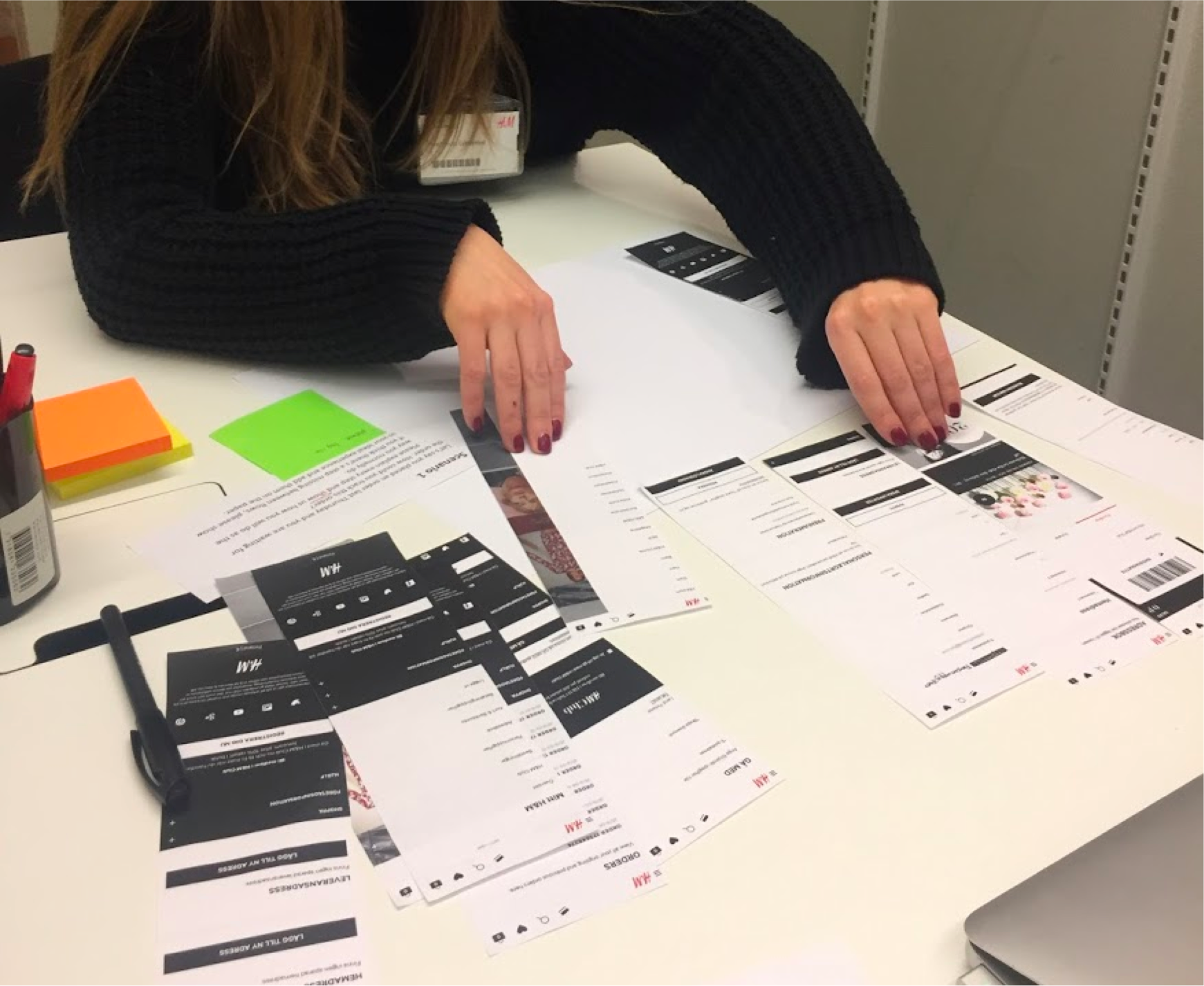
Collect customer insights about current My H&M and Club
- Defined the problem: Existing members confused by inconsistent structure across touchpoints
- Championed this effort to the steering group, arguing that a unified account was vital to long-term customer relationship
- Managed delegation to UX designers while ensuring consistent user experience
Clarifying Member Value
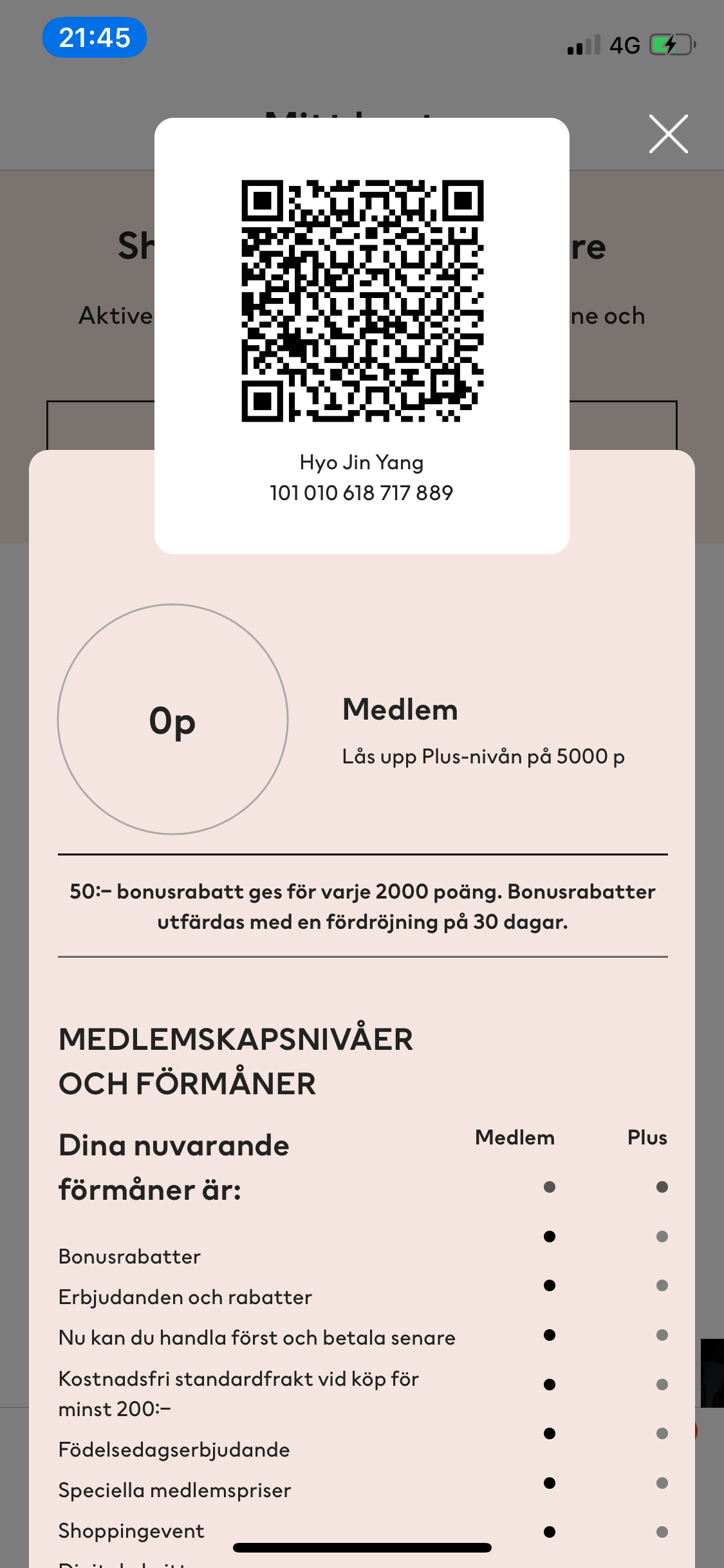
To combat the perception that membership had no benefits, we introduced a tiered system ("Member" and "Plus Member") with gamification elements. I managed the collaboration between our internal team and external agency to develop this concept.
Solution: Introduce tier levels with gamification elements (unlock and collect points) and provide clear overview of membership benefits
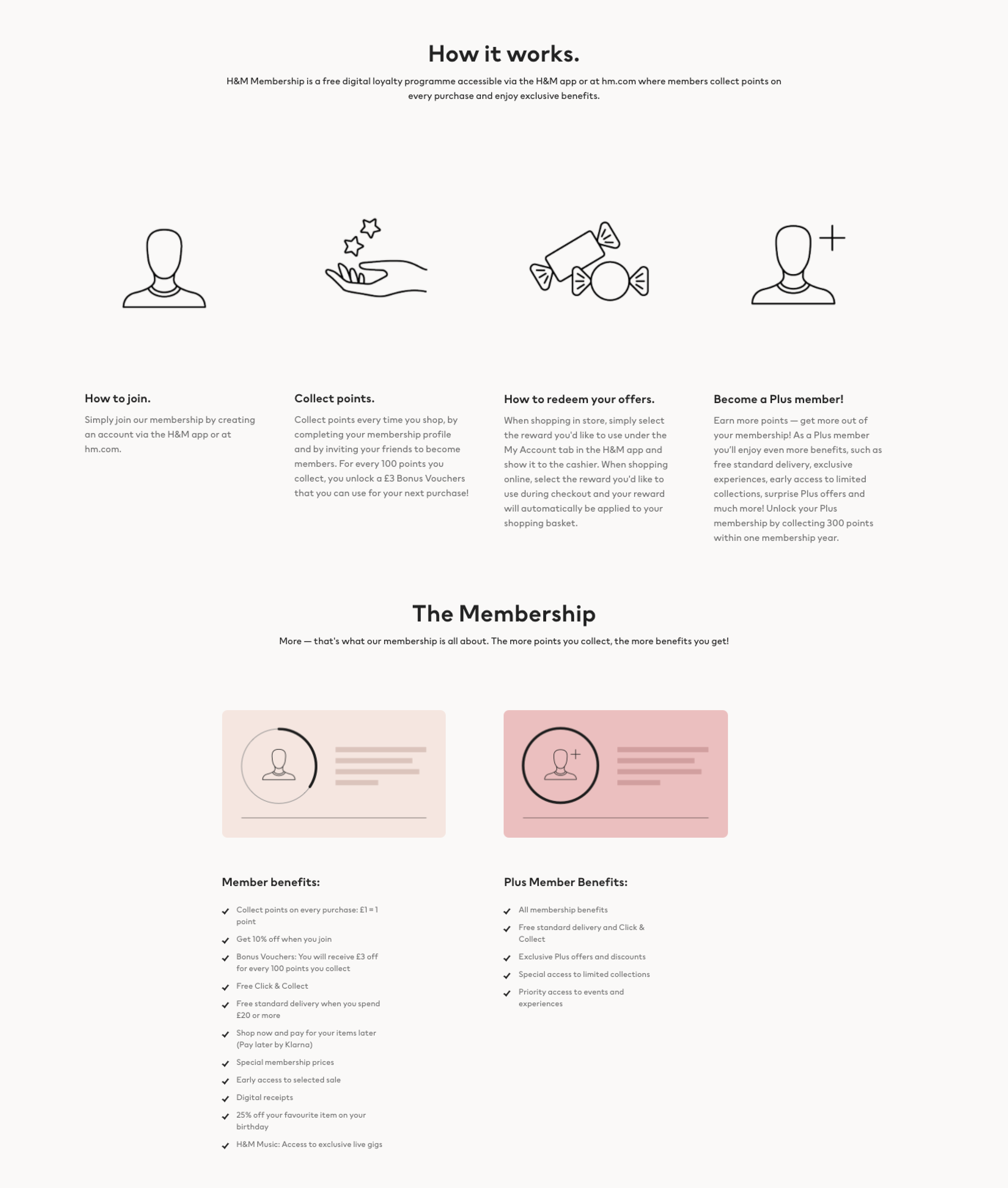
Membership page where we explain what's the membership and benefit of each tier level
My Role:
- Balanced UX work between internal employees and external agency (AKQA)
- Conducted guerilla tests and user tests of membership concepts
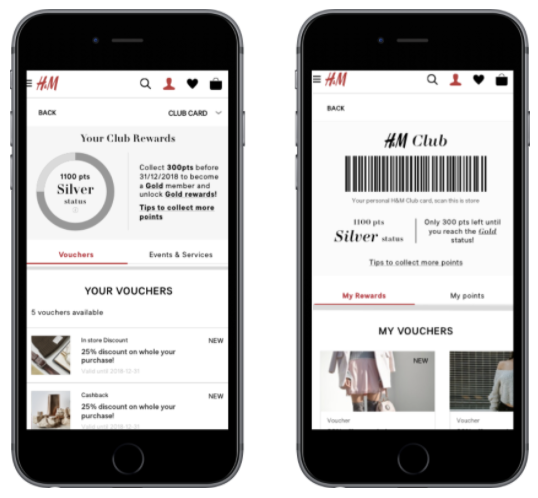
One of the concepts tested with users
- Iterated through five major revisions based on user testing and technical feasibility
Creating a Seamless Omni-Channel Journey
We tackled major friction points between online and offline shopping, introducing digital receipts, omni-channel offers, and "Pay Later" service that worked seamlessly in-store and online.
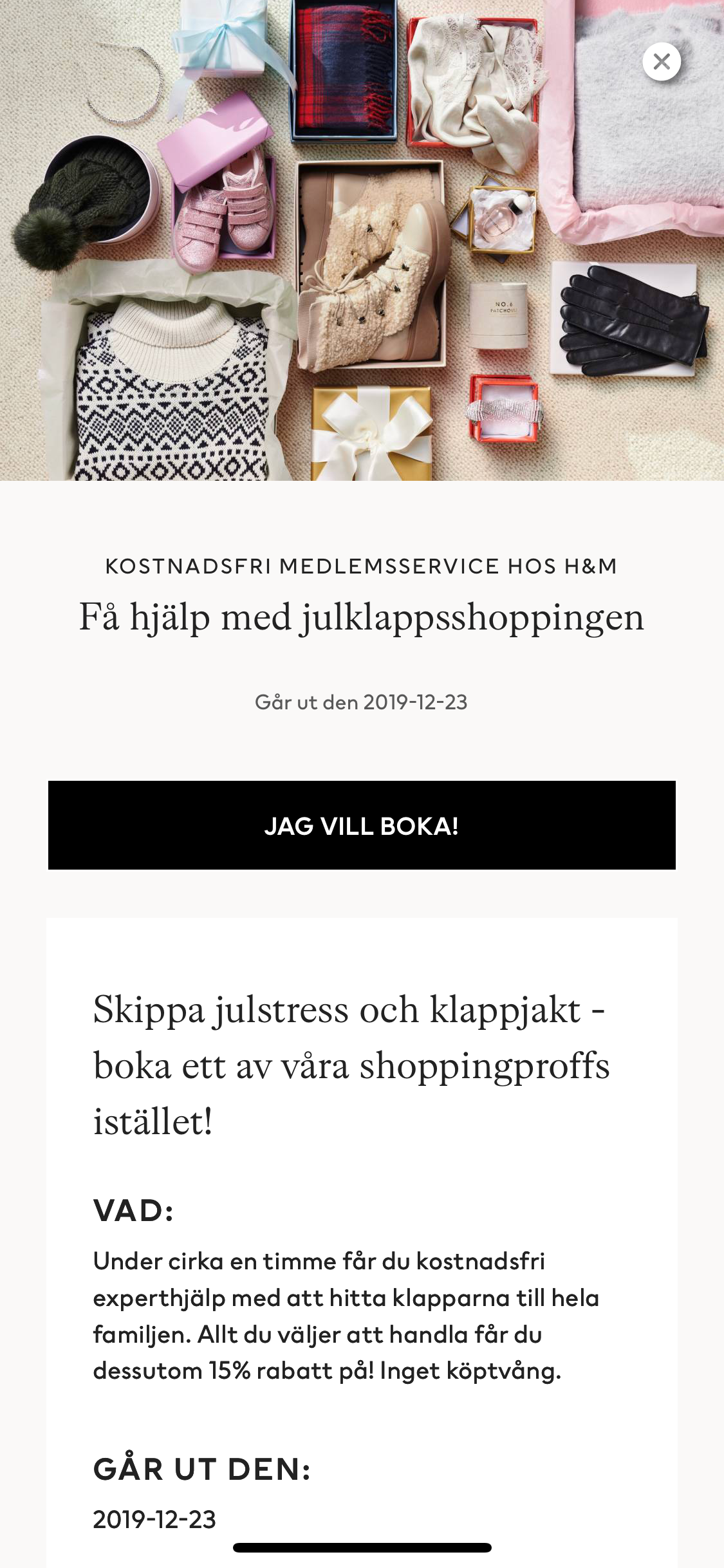
4.1. Omni-channel offers without redeeming points
Problem: "It's just a discount as other discounts you have, why I should redeem my points to get it?" & "I shop online because I don't really have the time to go out, but why I can't get this offer for my online order"
Solution: More relevant offers that H&M members can use without redeeming points regardless of online or offline channels
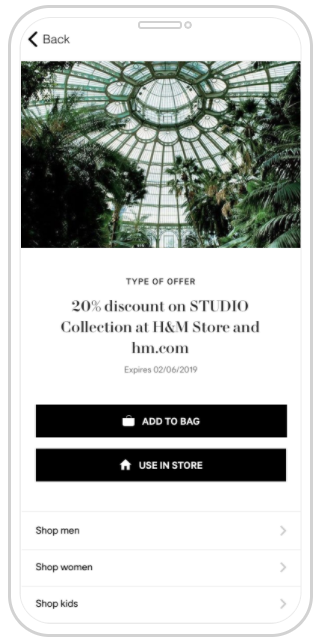
Omni-channel vouchers can be found on My page and checkout
My Role: Shared customer insights, crafted concept, ran user tests, and maintained UX balance after handover
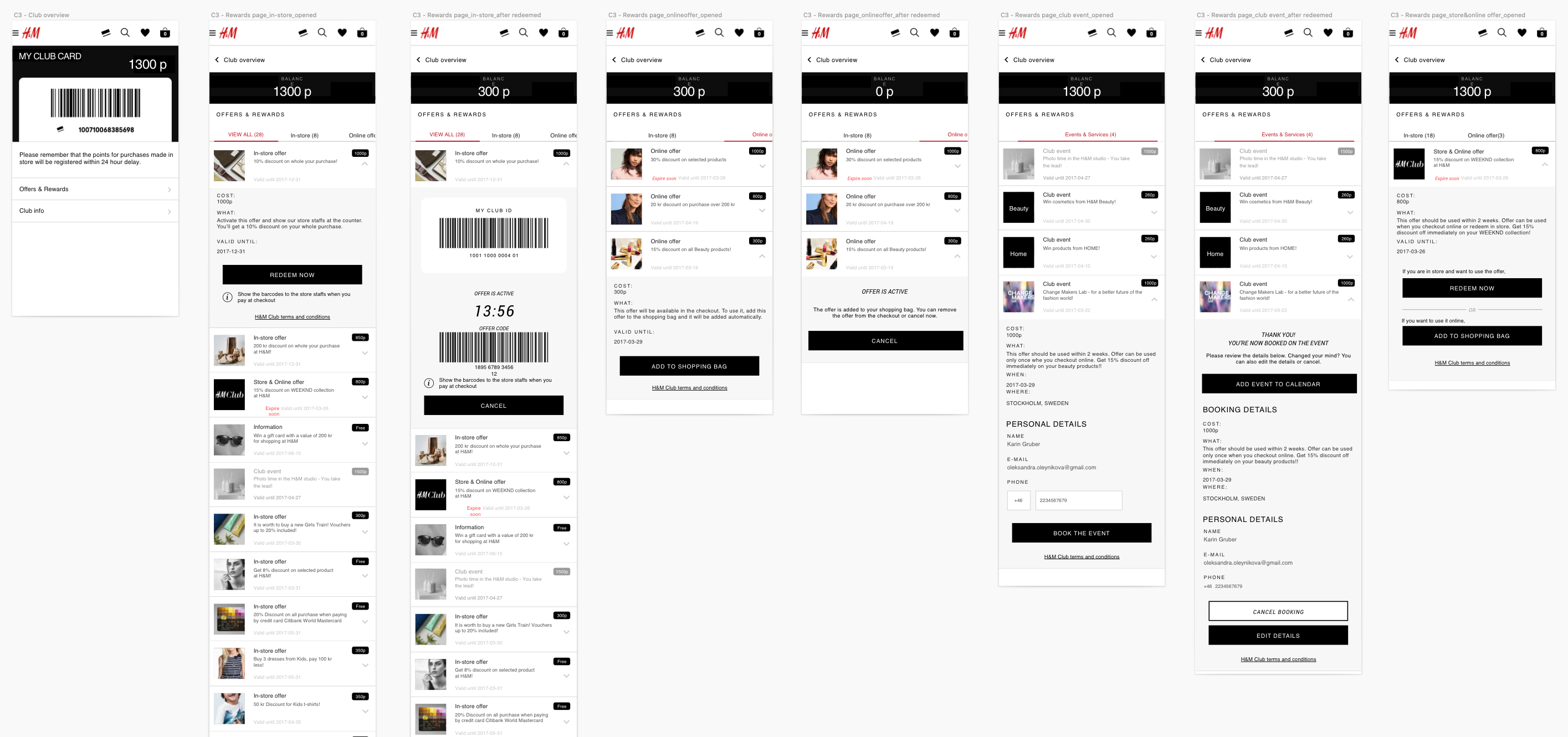
Concept flow created for user test (2nd concept of 4)
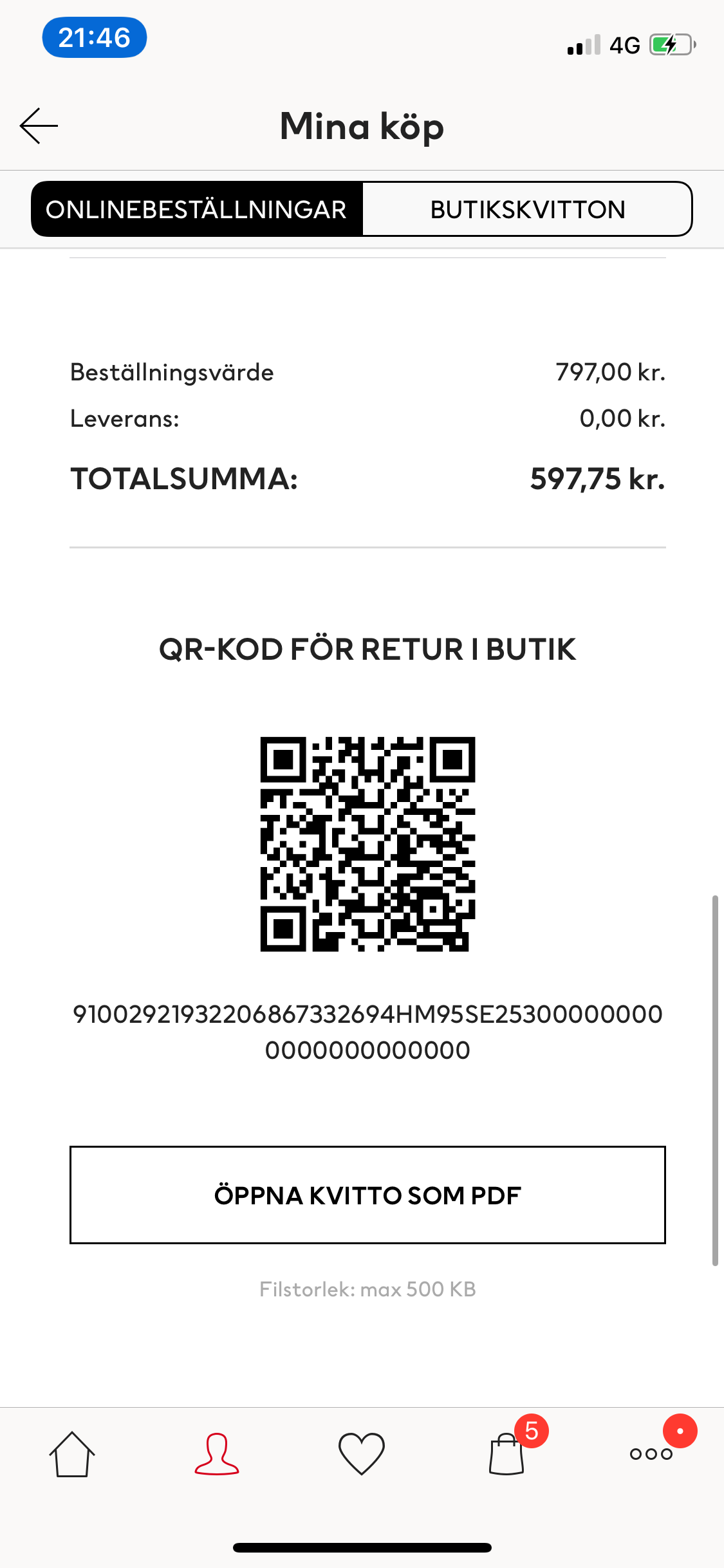
4.2. Digital Receipt
Problem: "I have to have my paper receipt with me to make a return to the store which I lost."
Solution: Customers can get store receipts digitally in their account, making it easier to track purchases and make returns without paper
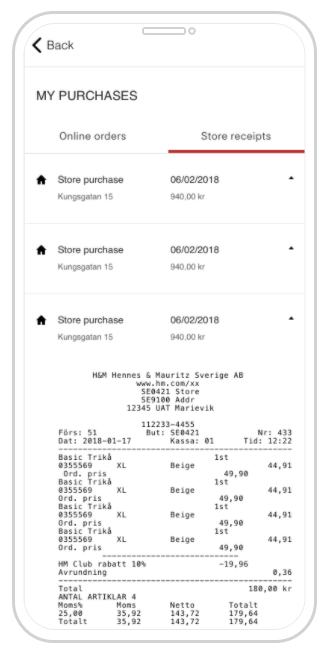
Digital Receipt, Store receipt is found in the purchase history together with the online orders
My Role: Crafted concept, ran user tests, led UX design approach through multiple iterations to balance technical feasibility
4.3. Pay Later service regardless of channel
Problem: "It's annoying to take my phone out to show my Club card and credit card to pay for my items (in Store)"
Solution: Remove thresholds by using a QR code in-store with the same payment method online
My Role: Collaborated with service designer to understand omni-channel experience, co-worked with Klarna to integrate payment solution, and delivered UX design deliverables
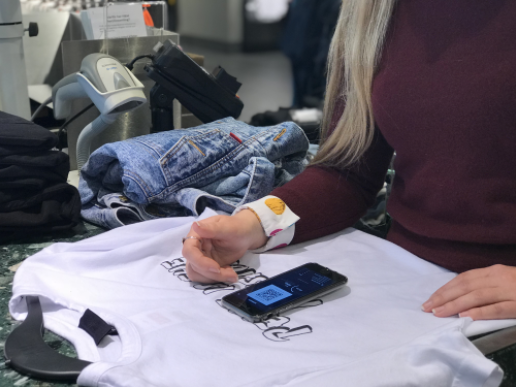
Pay Later service, Test participant is using the Club code to pay in the H&M Store
The Outcome — A Foundation for Growth
The program grew from 50 million members in 17 markets (2019) to 100 million members in 26 markets (2020)
Established clear KPIs to increase new member sign-ups, voucher usage, and digital membership card usage in-store
Recognized as "Sweden's best online dealer" by independent analysis, particularly for product recommendations and loyalty program
"E-COMMERCE: H&M SWEDEN'S BEST ONLINE DEALER, ACCORDING TO ANALYSIS - According to the analysis, H&M has succeeded particularly well with its product recommendations and its loyalty program."
— Svenska Dagbladet, October 6, 2020
Key Design Decisions & Trade-offs
We chose a flexible, market-adaptive sign-up over a single global form.
A universal form would have been simpler to build, but user research across markets revealed that sign-up requirements varied dramatically (WeChat in China, BankID in Sweden, email-only in others). The trade-off was higher development complexity, but it unlocked market-specific conversion optimization that a one-size-fits-all approach would have blocked.
We merged "My H&M" and "H&M Club" despite strong internal resistance to combining separate P&Ls.
The account team and loyalty team operated as separate business units with different KPIs. Research showed customers saw no distinction. I championed the merger to the steering group, arguing that customer confusion was costing more than organizational convenience. The trade-off was a 6-month realignment of internal metrics, but the unified experience drove measurably higher engagement.
We deprioritized gamification depth in favor of clear value communication.
Early concepts included complex gamification mechanics (challenges, streaks, badges). User testing revealed that customers first needed to understand basic membership value before engaging with gamification. We simplified to a two-tier system (Member / Plus Member) with clear benefit visualization, deferring deeper gamification to later iterations.
Navigating Organizational Complexity
The hardest part of this project wasn't the design — it was aligning a fragmented organization around a unified customer vision across 74 markets with different technical stacks, regulatory requirements, and business priorities.
As Lead UX Designer, I:
- Influenced the steering group to prioritize customer experience over organizational convenience, securing approval for the My H&M / Club merger
- Managed a team of two UX designers plus an external agency (AKQA), distributing work based on expertise while maintaining UX consistency across all deliverables
- Established user research as a decision-making input — before my involvement, product decisions were primarily driven by business stakeholders without systematic customer input
- Navigated conflicting priorities between the global team (wanting standardization) and market teams (wanting localization), finding a modular approach that satisfied both
Key Takeaway
The greatest challenge was shaping a unified vision that balanced conflicting customer behaviors, business needs, and deep technical constraints across 74 markets. My key role was to foster a culture of collaboration, bringing stakeholders, designers, and developers together toward a common goal.
By consistently sharing customer insights, we shifted the organization's mindset from assumption-based ideation to data-driven problem-solving. This project succeeded because we built a shared understanding and a collective drive to deliver a truly customer-centric experience.
Outcomes & Next Steps
What changed: customers could better understand membership value and navigate a more coherent account journey.
What scaled: modular, market-adaptive UX patterns enabled global expansion without losing local relevance.
Next: continue improving post-signup retention loops and deepen personalization around loyalty behavior.